How to add a survey popup to a Shopify store without a developer
A step-by-step guide to a survey on Shopify: install one line, write the questions and options in the Clew editor, choose the page and the moment, and read the answers in your stats.
- Time
- ● 15 minutes
- Price
- 14-day free trial, no card
- Who does it
- Store owner or staff with theme access
Example: a survey on Shopify
A store asks about abandoned carts where they are abandoned: 15 seconds into the cart page, a corner survey asks “What is stopping you from ordering?” with four options and an optional free answer. Within a week “shipping cost” leads by a distance — and the shipping page gets rewritten instead of the checkout.
This format is part of the Pro plan. Every new account starts with a 14-day free trial with all formats and audience rules, no card required. When the trial ends nothing is deleted and published items keep showing; the Free plan keeps tours and tooltips free.
How to add a survey on Shopify, step by step
- Step 01
Copy your Clew snippet
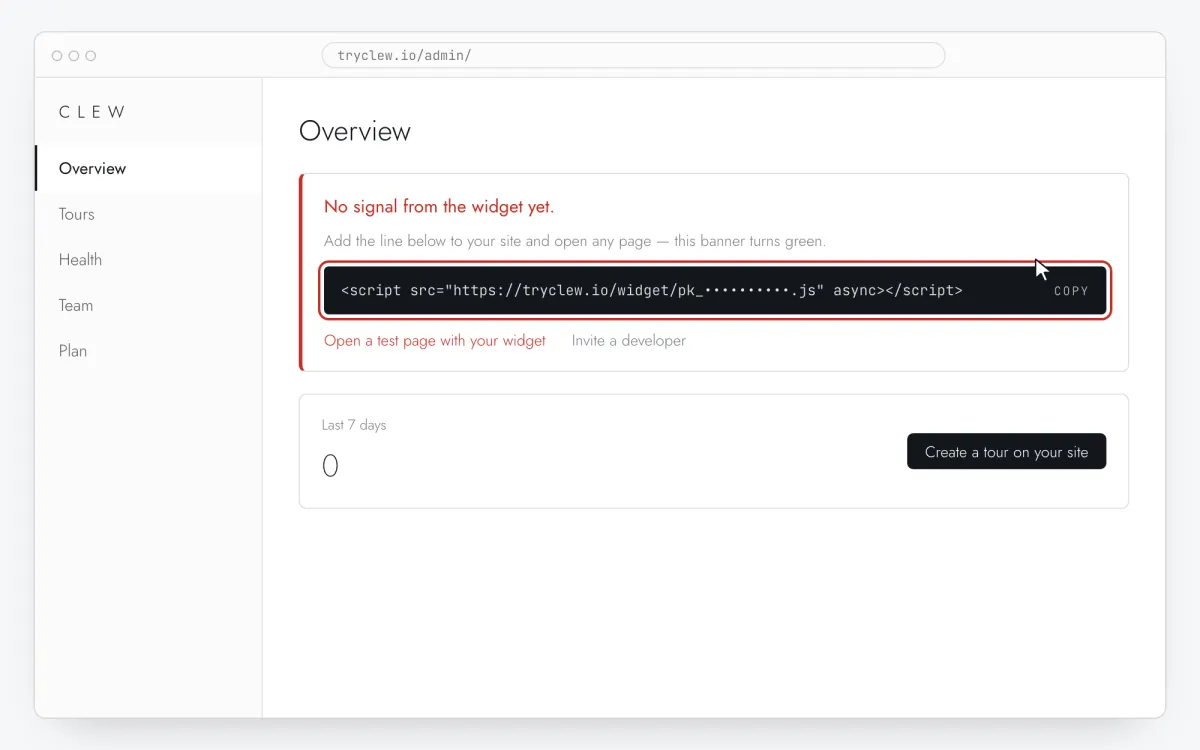
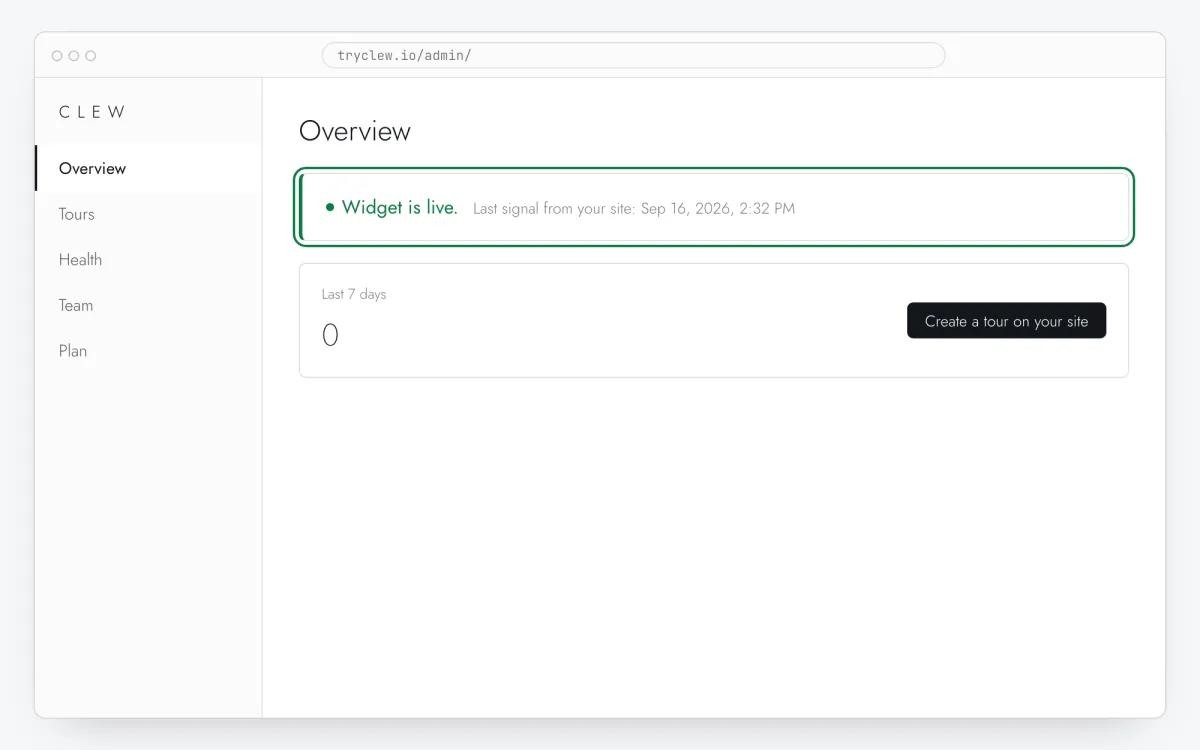
Create a free account (or sign in), add your site and open Admin → Overview. Click the line in the “No signal from the widget yet.” card to copy it — it carries your real site key instead of the placeholder.
<!-- Clew: replace PASTE_YOUR_SITE_KEY with the site key from Admin > Overview -->
<script src="https://tryclew.io/widget/PASTE_YOUR_SITE_KEY.js" async></script>
Step 1 · schematic illustration - Step 02
Open the theme code
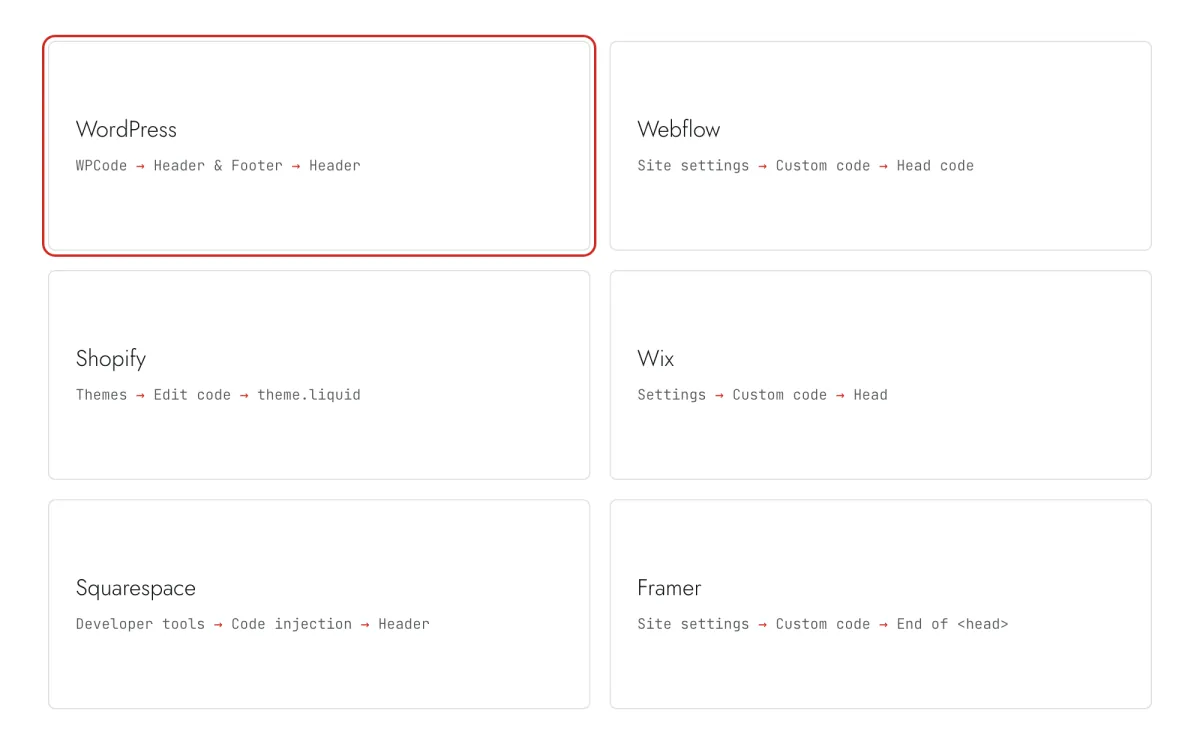
In Shopify admin go to Online Store → Themes, press … next to the live theme and choose Edit code.
Step 2 · schematic illustration - Step 03
Paste the line into theme.liquid
Open
layout/theme.liquid, paste the Clew line right before</head>and press Save. It loads on every storefront page.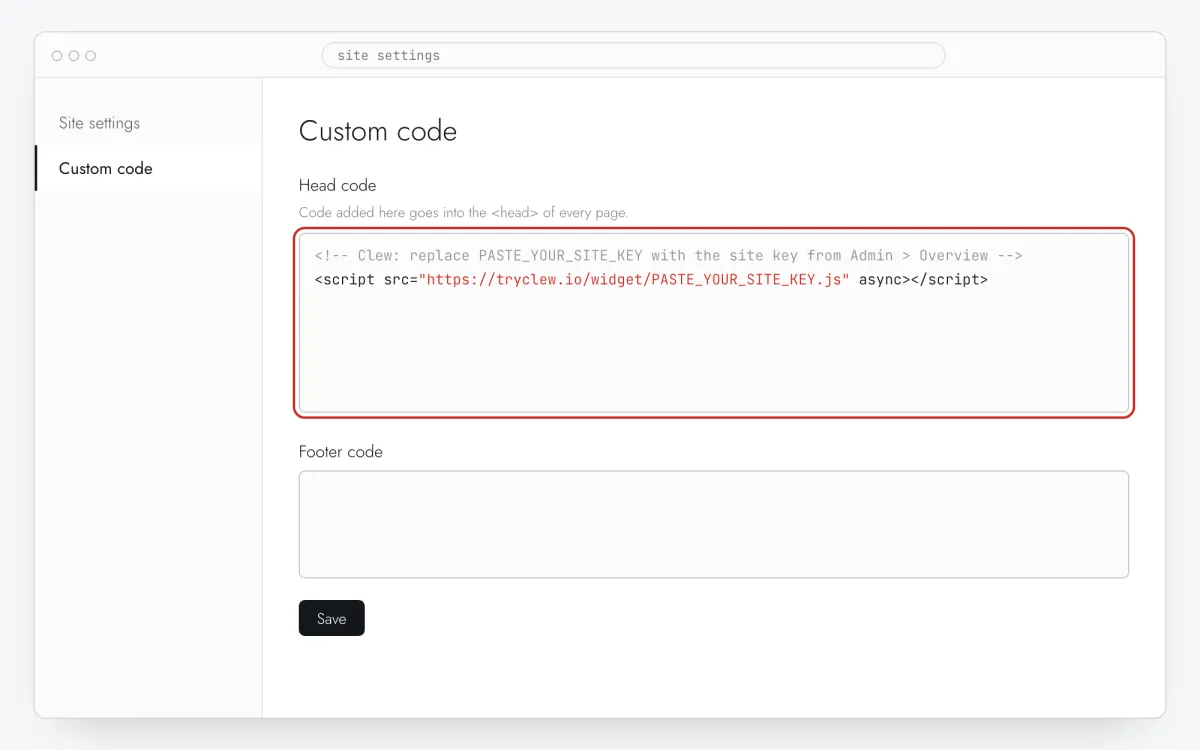
Step 3 · schematic illustration - Step 04
Check the storefront
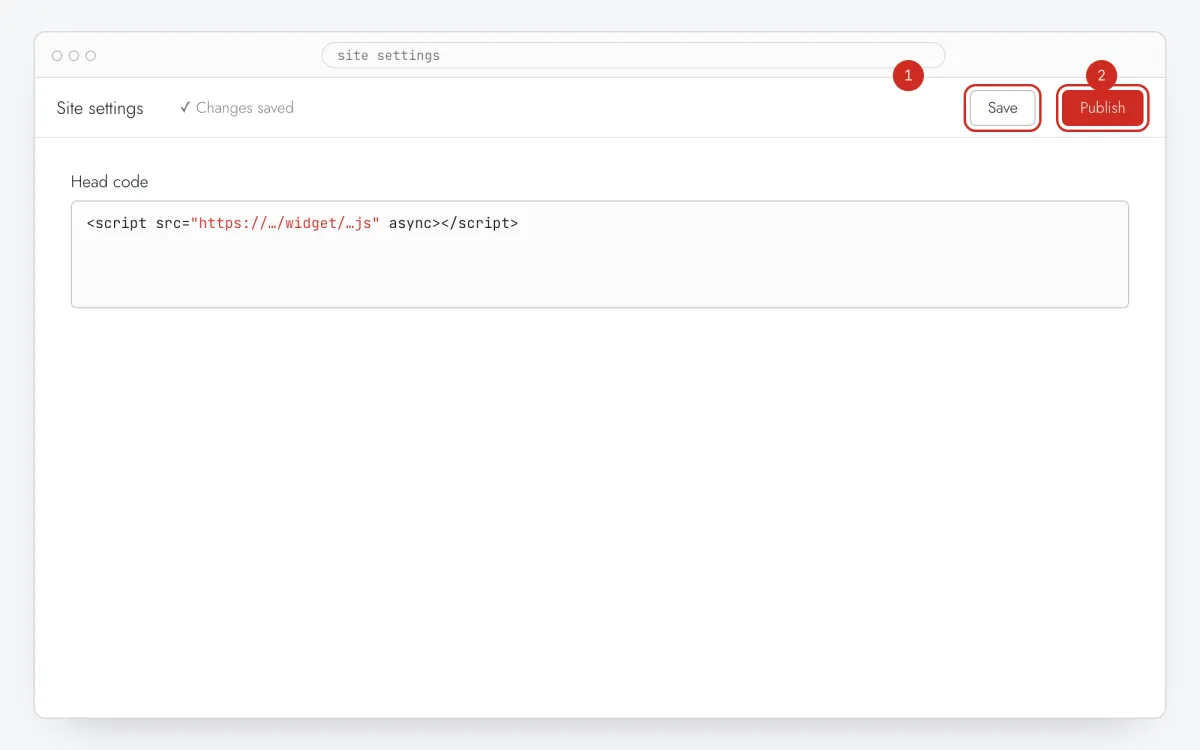
Open the store in a new private window (with the storefront password if the store isn’t launched yet) and make sure pages load normally.
Step 4 · schematic illustration - Step 05
Build the survey in Clew
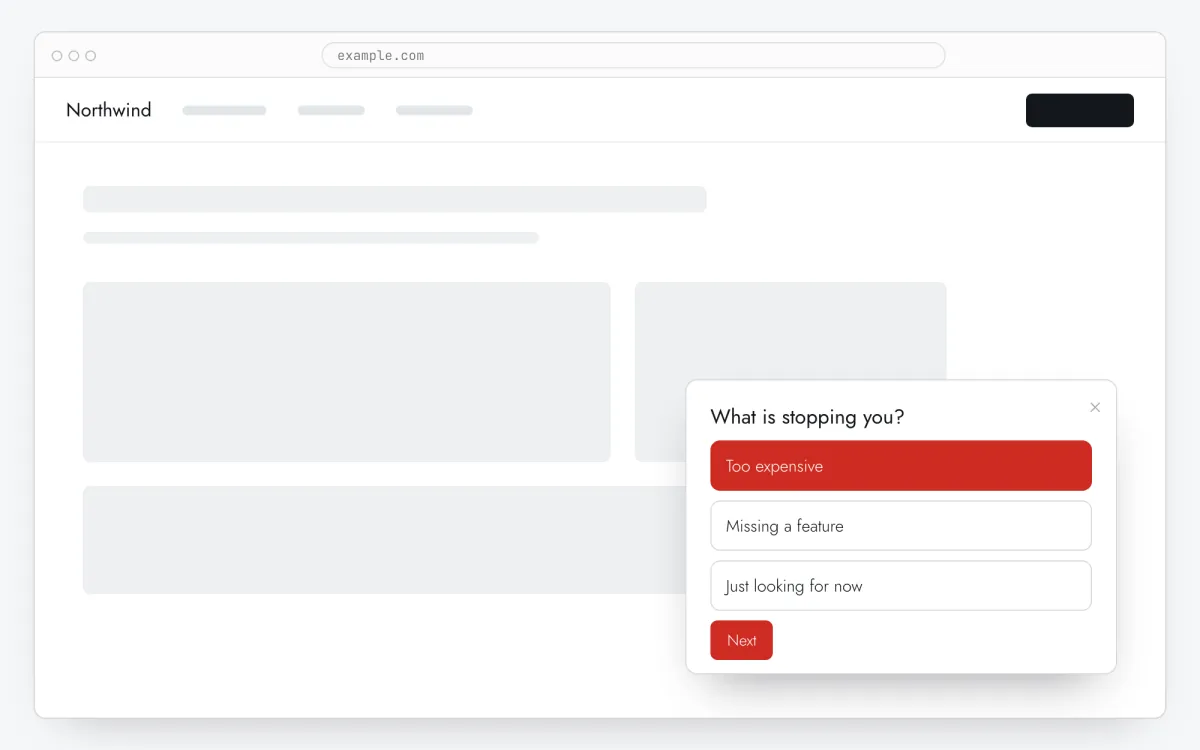
In Clew open Flows → + New flow and set Format to Survey. Write Question and the options, tick Required question where it matters, and add a second question with + Question. Set Where it shows to “In a corner” if you would rather not cover the page.
Step 5 · schematic illustration - Step 06
Choose where, when and for whom it shows
In the same editor, set Where to show (page URL), When to show, Audience targeting and Frequency. These are the settings of the example above:
Setting Value Format Survey Where to show (page URL) Section by prefix /cartWhen to show After N seconds: 15 seconds Audience targeting No rules — everyone who opens the page Frequency Once per visitor 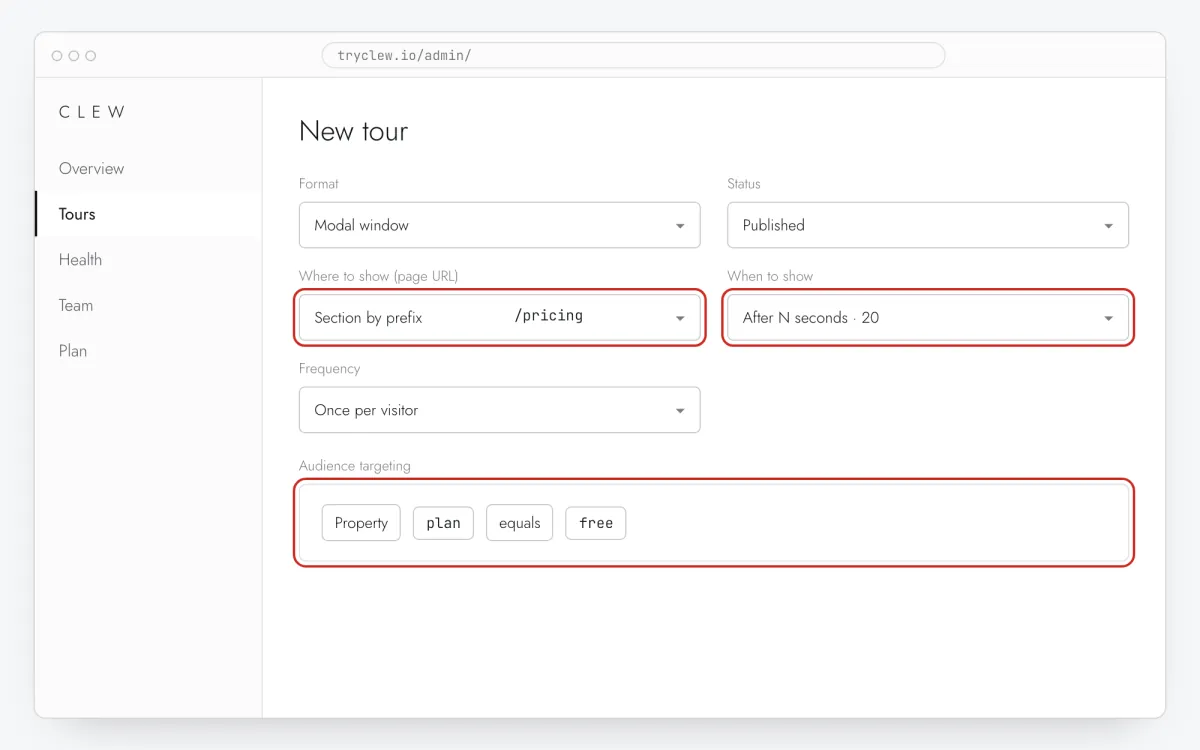
Step 6 · schematic illustration - Step 07
Publish and check it on the live site
Set Status to Published and save. Open the page in a private window — Clew remembers who has already seen a “once” item, so your usual browser may skip it. Views, completions and drop-offs appear in the tour stats.
Step 7 · schematic illustration
Pitfalls: website survey on Shopify
Checkout is out of reach
Shopify doesn’t run theme scripts on checkout pages, so a website survey can live on product, collection, cart and content pages, not in checkout. Plan the message before the customer gets there.
Custom pixels can’t show UI
Settings → Customer events runs code in a sandbox without access to the page. It works for analytics, not for a website survey — use theme.liquid.
Don’t ask in the first second
Somebody who has not looked at anything yet answers at random or closes the window. Use After N seconds on the page that matters, or On the Nth visit.
The options have to cover the answer
If none of them fits, a required question becomes a trap and people close the survey. Add something like “Just looking for now”, or make the question optional.
Questions and answers
Will it get in the way of checkout?
Put Where it shows on “In a corner” and keep it on the cart page rather than inside checkout: the point is to hear the reason, not to add a step to the purchase.
Can I ask only returning visitors?
Yes: use On the Nth visit with 2 or 3, so a first-time visitor is not asked why they are not buying yet.
Is there a Shopify app for Clew?
No, and none is needed: one line in theme.liquid is the whole install. It doesn’t add app charges or theme app blocks.
Can I ask only people who reached the cart?
Yes: point Where to show (page URL) at the cart or checkout address, or pass a property with Clew.identify() and add a rule in Audience targeting.
Does the survey work with tracking turned off?
No. Answers travel on the same channel as events: with data-no-track or Clew.setTracking(false) the survey shows and can be filled in, but nothing is sent.
What else you can add on Shopify
- How to add a popup to a Shopify store without a developer
- How to add a tooltip on Shopify without a developer
- How to add a paywall upgrade prompt on Shopify without a developer
- How to add a rating popup to a Shopify store without a developer
- How to add an announcement bar to a Shopify store without a developer