How to make an image popup on a WordPress site without a developer
A step-by-step guide to an image popup on WordPress: install one line, paste the image address in the Clew editor, choose the size and the side, and decide when it shows.
- Time
- ● 10 minutes
- Price
- 14-day free trial, no card
- Who does it
- WordPress administrator
Example: an image popup on WordPress
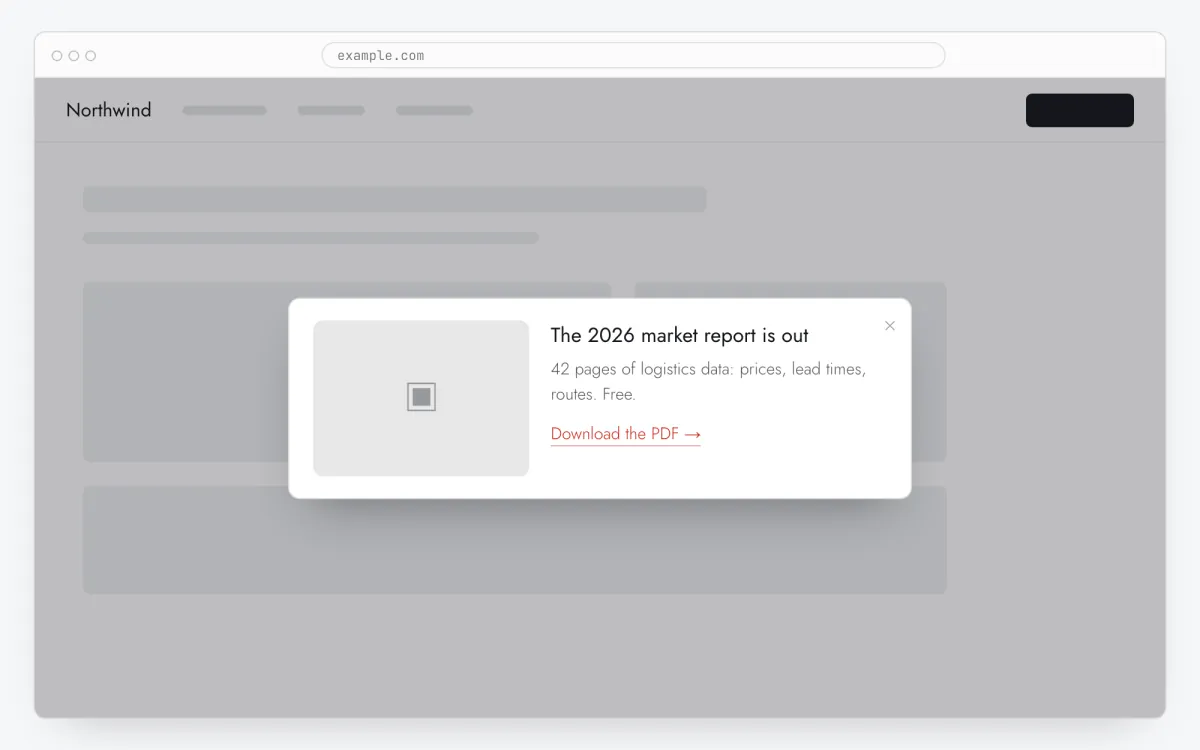
A publication gives away a guide: in the blog, at 70% scroll, a modal opens with the PDF cover on the left and an email form on the right. The cover sits in the site’s Media library and its URL is pasted into the step. People can see what they are getting, and sign-ups beat the same popup without a picture.
https URL only — the file stays yours, in your CDN, your media library, your cloud. You can replace it any time without touching the tour, and we do not become a file host that would one day need moderating.This format is part of the Pro plan. Every new account starts with a 14-day free trial with all formats and audience rules, no card required. When the trial ends nothing is deleted and published items keep showing; the Free plan keeps tours and tooltips free.
How to add an image popup on WordPress, step by step
- Step 01
Copy your Clew snippet
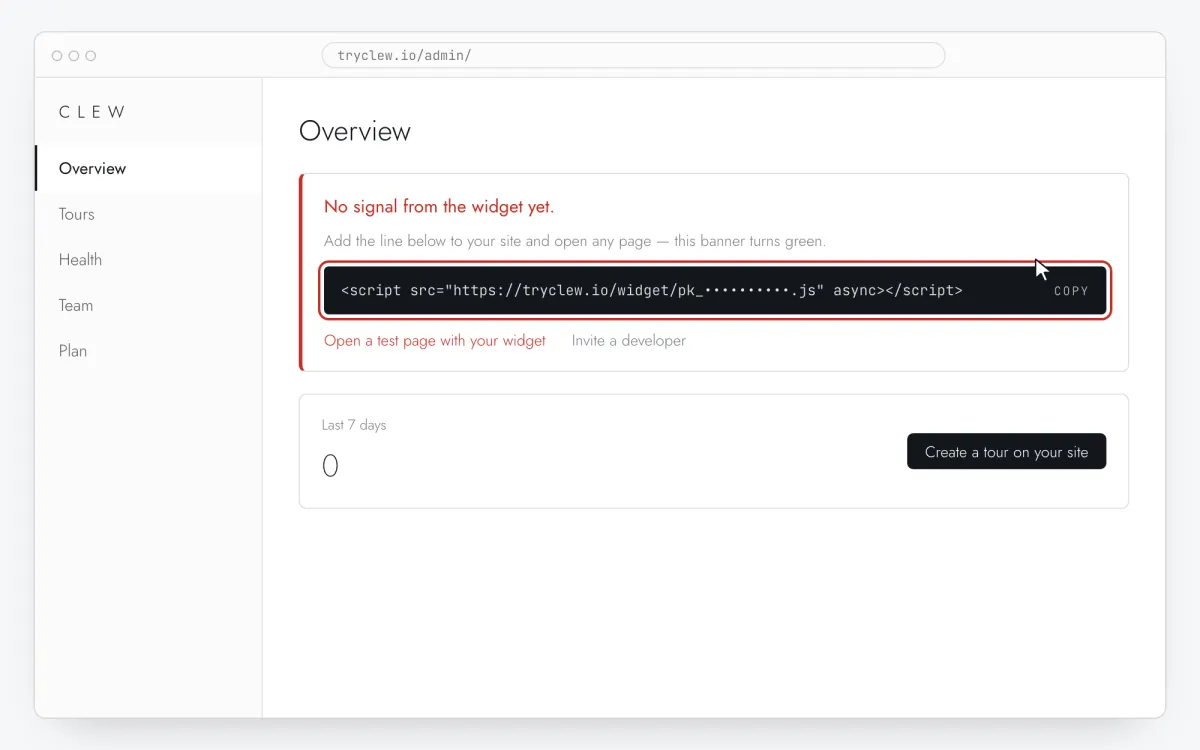
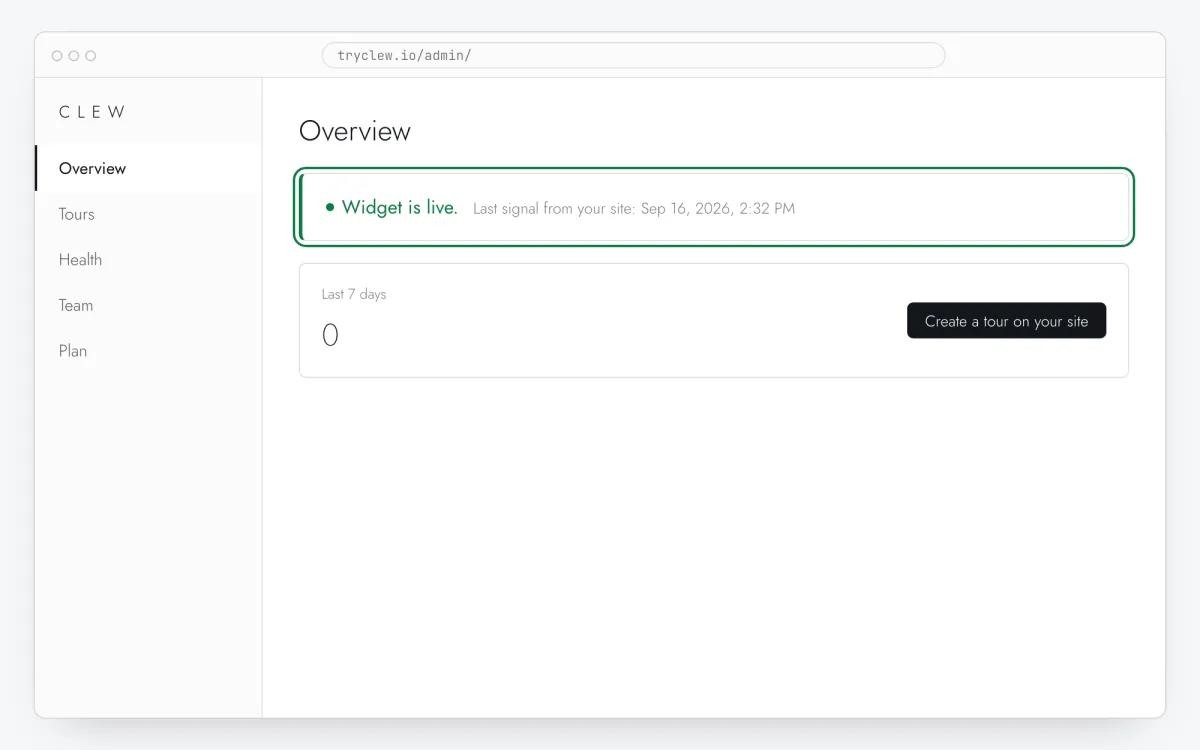
Create a free account (or sign in), add your site and open Admin → Overview. Click the line in the “No signal from the widget yet.” card to copy it — it carries your real site key instead of the placeholder.
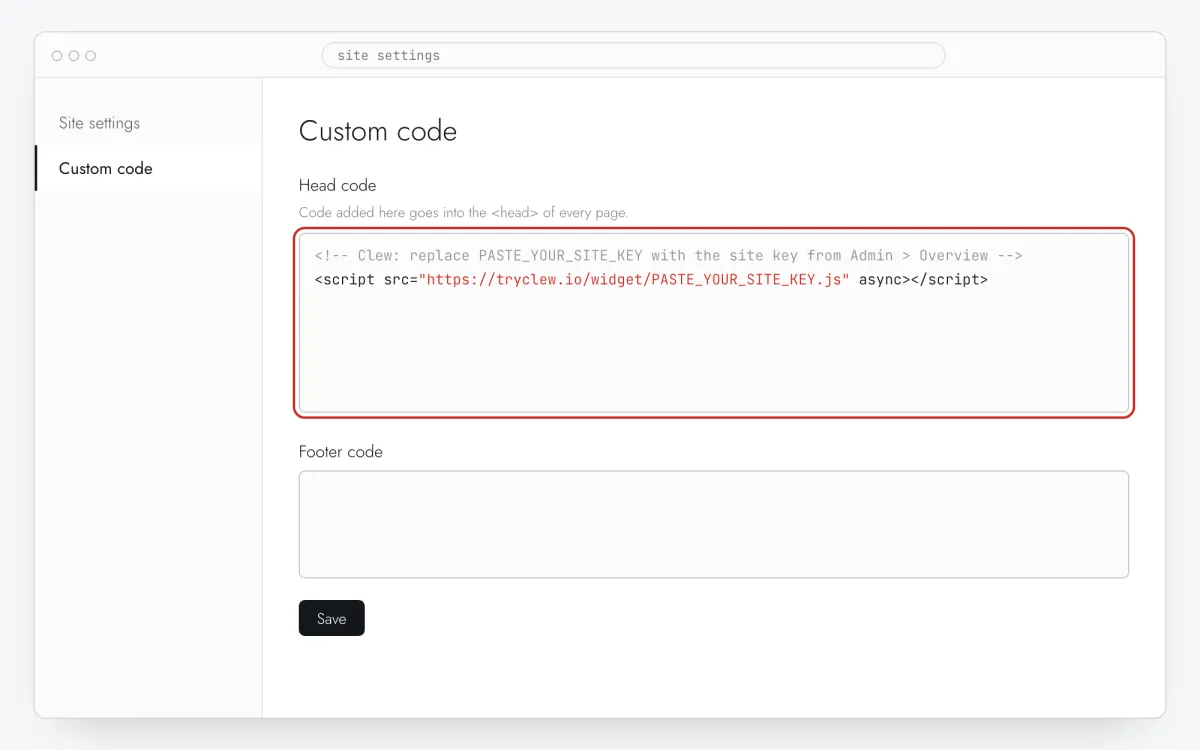
<!-- Clew: replace PASTE_YOUR_SITE_KEY with the site key from Admin > Overview -->
<script src="https://tryclew.io/widget/PASTE_YOUR_SITE_KEY.js" async></script>
Step 1 · schematic illustration - Step 02
Install a header code plugin
In Plugins → Add New install and activate the free WPCode plugin (or use your theme’s own “header scripts” option). Don’t edit
header.php: theme updates overwrite it.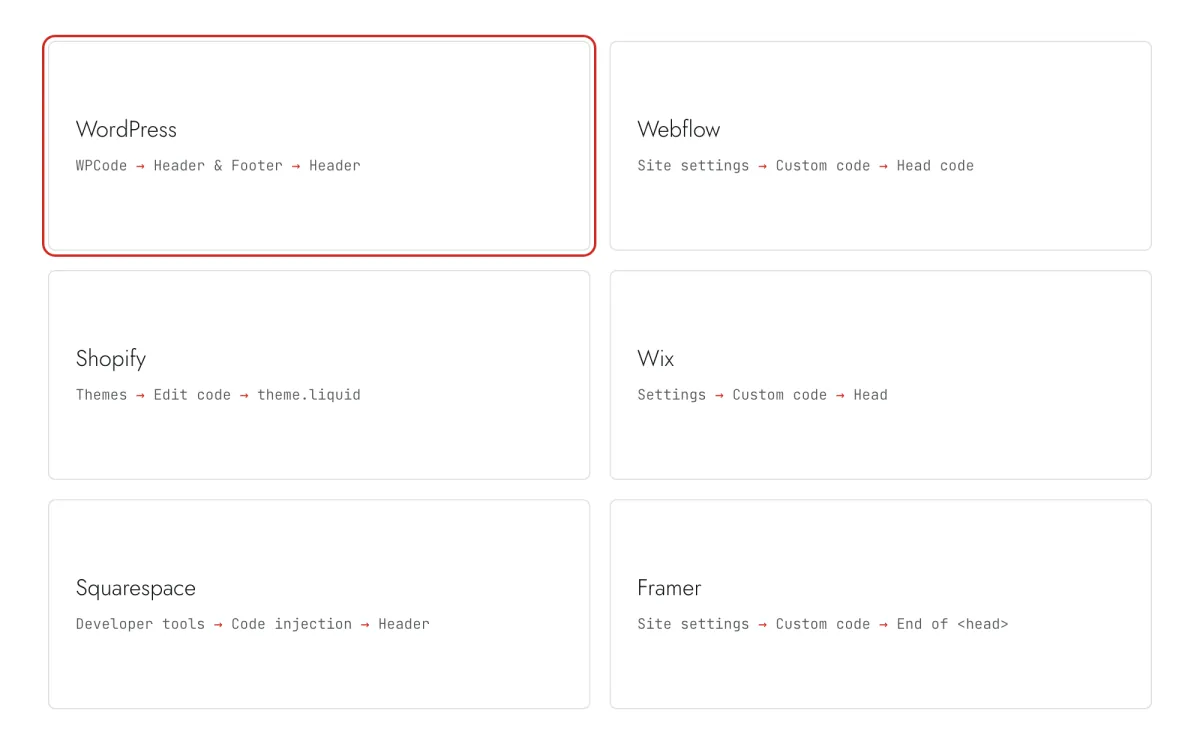
Step 2 · schematic illustration - Step 03
Paste the line into the Header box
Open Code Snippets → Header & Footer, paste the Clew line into Header and press Save Changes.
Step 3 · schematic illustration - Step 04
Purge the cache
If you use WP Rocket, LiteSpeed Cache, W3 Total Cache or a CDN, purge the cache. In “delay JavaScript” settings, exclude
tryclew.io/widget.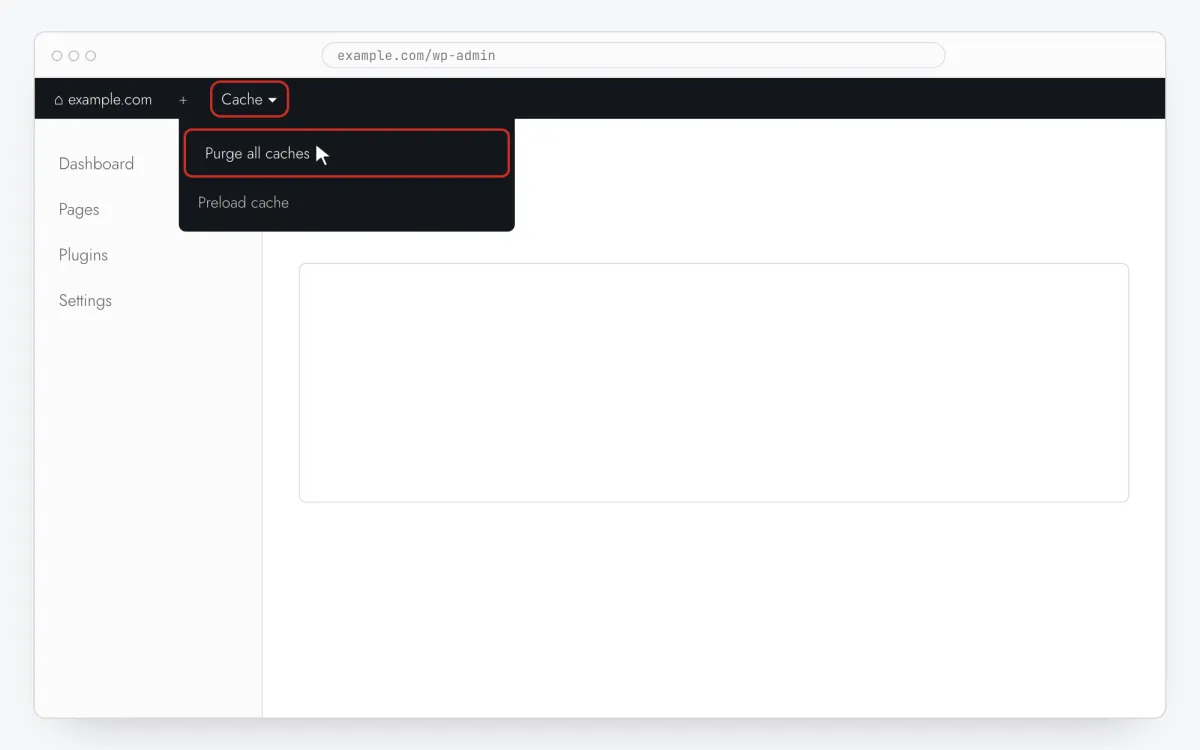
Step 4 · schematic illustration - Step 05
Build the window in Clew
In Clew open Flows → + New flow and set Format to Modal window. In the step write Title and Text, paste the image address and choose its size and side. Set the button in Link text and Link URL.
Step 5 · schematic illustration - Step 06
Choose where, when and for whom it shows
In the same editor, set Where to show (page URL), When to show, Audience targeting and Frequency. These are the settings of the example above:
Setting Value Format Modal window Where to show (page URL) Section by prefix /blogWhen to show After scrolling N%: 70 % of page Audience targeting No rules — everyone who opens the page Frequency Once per visitor 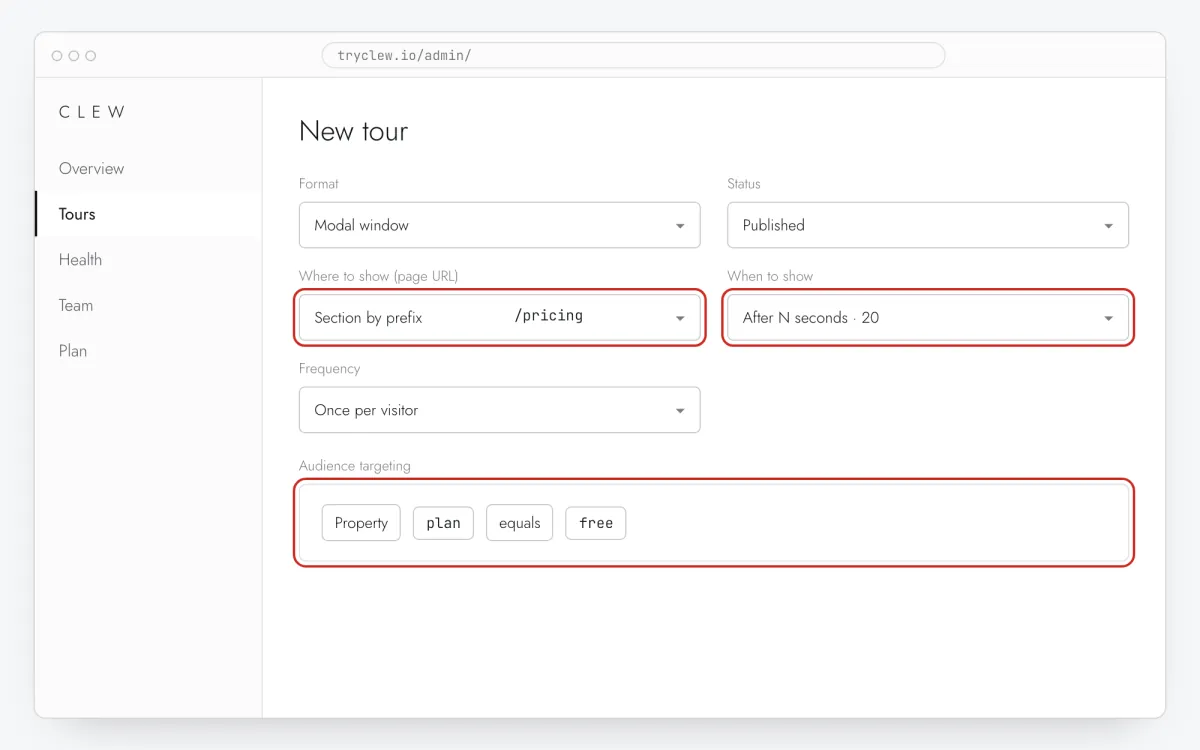
Step 6 · schematic illustration - Step 07
Publish and check it on the live site
Set Status to Published and save. Open the page in a private window — Clew remembers who has already seen a “once” item, so your usual browser may skip it. Views, completions and drop-offs appear in the tour stats.
Step 7 · schematic illustration
Pitfalls: image popup on WordPress
“Delay JavaScript” hides the image popup until interaction
WP Rocket, LiteSpeed and Perfmatters can postpone scripts until the first scroll or click. The widget then starts late and a Right on page load item looks broken. Add tryclew.io/widget to the exclusions.
The file’s address, not the page about it
A link to a media-library page or a cloud preview returns HTML, not an image, and the window stays empty. Open the picture in a new tab and copy the address from there — it ends with the file extension.
A file blocked from other sites
Some storage serves images only to its own domain. If the window is empty but the address opens fine in a new tab, try another source — your site’s media library or a CDN.
Questions and answers
Can I use an image from the Media library?
Yes, and it is the most reliable option: open the file in the library and copy the “File URL” — it is on your own domain and served over https.
Will the popup slow the blog down?
The image loads only when the popup opens, after 70% scroll, so it does not affect the page’s own speed. Compressing the file is enough.
Does it work on WordPress.com?
Plugins such as WPCode need a WordPress.com Business plan or higher. Self-hosted WordPress works on any hosting.
Can I use an image from my site’s media library?
Yes, and it is the most reliable option: the file sits on your own domain, is served over https and is not going anywhere.
What image size should I use?
The window is about 420 pixels wide, so an 840-pixel-wide image covers double-density screens too. A file over a megabyte almost always means it should be compressed.
What else you can add on WordPress
- How to add a popup to a WordPress site without a developer
- How to create a product tour on WordPress without a developer
- How to add a tooltip on WordPress without a developer
- How to create an interactive product guide on WordPress without a developer
- How to add a rating popup to a WordPress site without a developer
- How to add an announcement bar to a WordPress site without a developer
- How to add a survey popup to a WordPress site without a developer