How to create a product tour via Google Tag Manager without a developer
A guided walkthrough via Google Tag Manager in about twenty minutes: install one line, click through your own interface in the visual editor, and publish a tour that starts where new users need it.
- Time
- ● 20 minutes
- Price
- Free plan
- Who does it
- Anyone who can publish in GTM
Example: a product tour via Google Tag Manager
An analytics SaaS released a new report builder but can’t get developer time for onboarding. Through GTM, product adds a 4-step tour on /app/reports: pick a date range, choose metrics, save the view, share it. It starts for everyone once.
Free on the Clew Free plan — no card, no time limit: one site and up to 3 published tours or tooltips. Audience rules and A/B tests come with Pro.
How to build the product tour via Google Tag Manager, step by step
- Step 01
Copy your Clew snippet
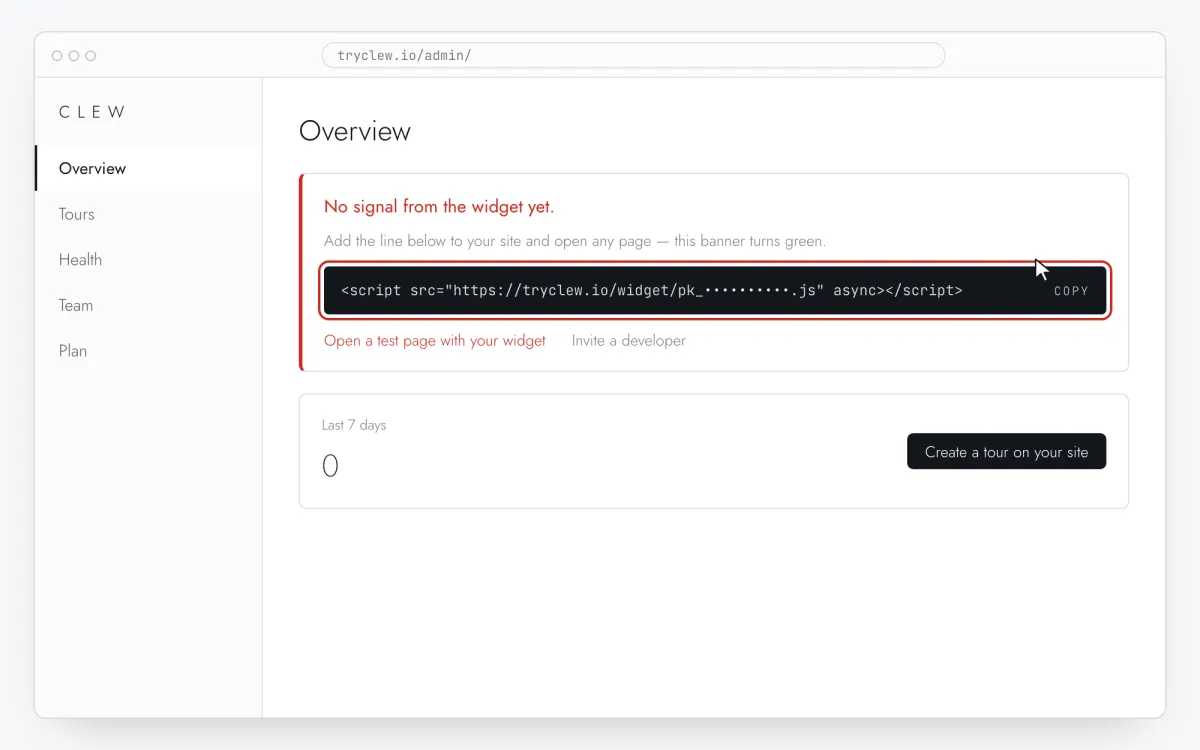
Create a free account (or sign in), add your site and open Admin → Overview. Click the line in the “No signal from the widget yet.” card to copy it — it carries your real site key instead of the placeholder.
<!-- Clew: replace PASTE_YOUR_SITE_KEY with the site key from Admin > Overview -->
<script src="https://tryclew.io/widget/PASTE_YOUR_SITE_KEY.js" async></script>
Step 1 · schematic illustration - Step 02
Create a Custom HTML tag in GTM
In tagmanager.google.com open your container, Tags → New → Tag Configuration → Custom HTML, and paste the Clew line. Name the tag
Clew widget.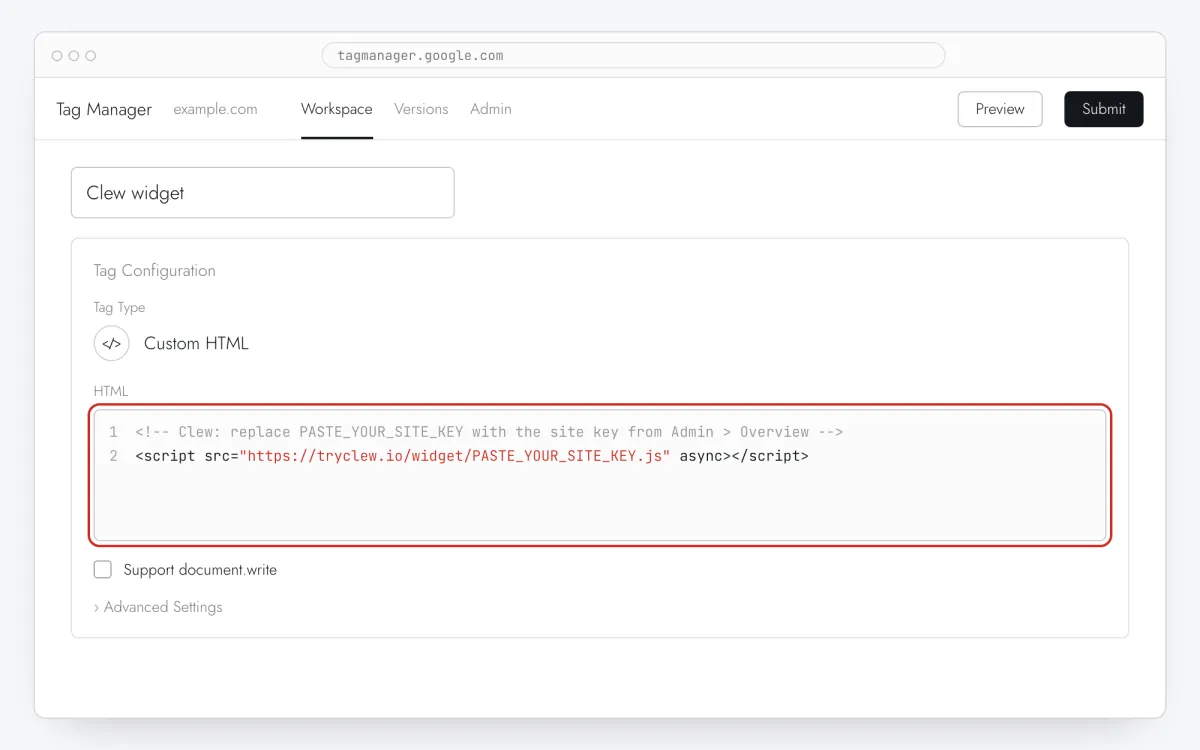
Step 2 · schematic illustration - Step 03
Fire it on All Pages
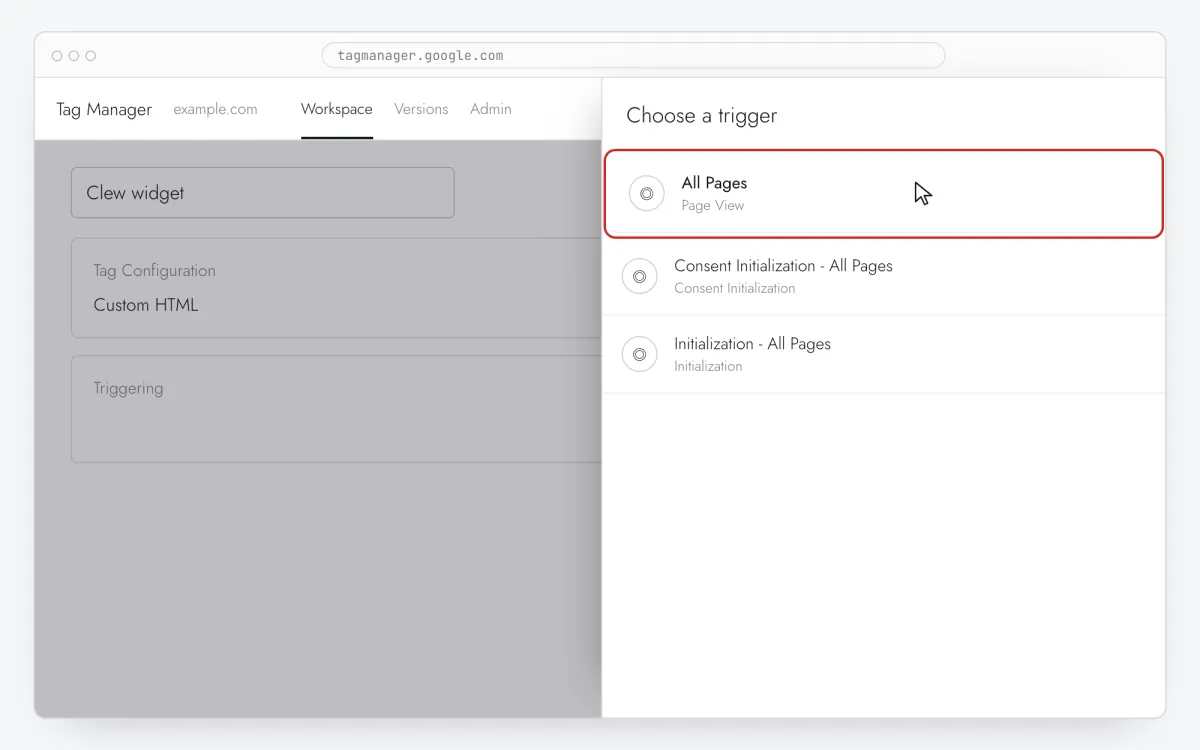
In Triggering choose All Pages and save. Load it everywhere: which page shows the product tour is decided in Clew, not in GTM.
Step 3 · schematic illustration - Step 04
Preview, then Submit and Publish
Check in Preview that
Clew widgetis under Tags Fired, then Submit → Publish. Nothing reaches the live site before you publish.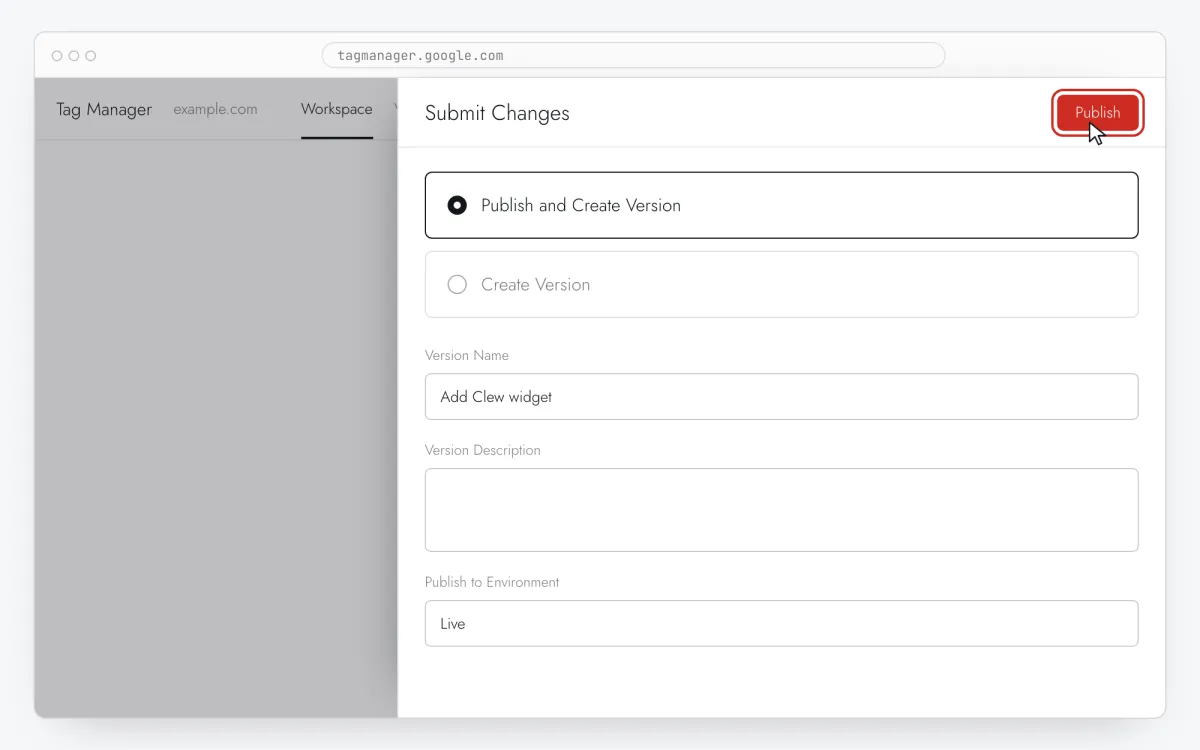
Step 4 · schematic illustration - Step 05
Build the tour on top of your page
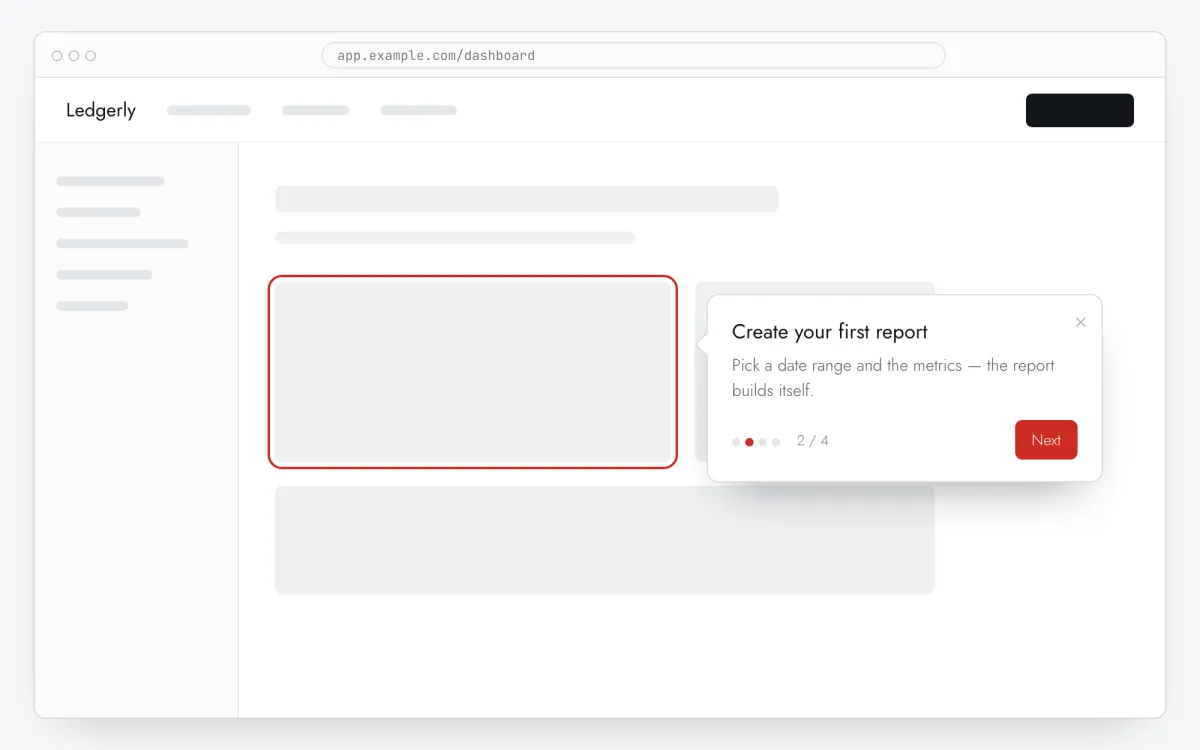
In Clew open Flows → + New flow, keep Format at Step-by-step tooltips and press Edit on your site. On your page press Pick element and click the element for step 1, then write a title and one or two sentences. Repeat for 3–5 steps; the preview updates as you type.
Step 5 · schematic illustration - Step 06
Choose where, when and for whom it shows
In the same editor, set Where to show (page URL), When to show, Audience targeting and Frequency. These are the settings of the example above:
Setting Value Format Step-by-step tooltips Where to show (page URL) Section by prefix /app/reportsWhen to show Right on page load Audience targeting No rules — everyone who opens the page Frequency Once per visitor 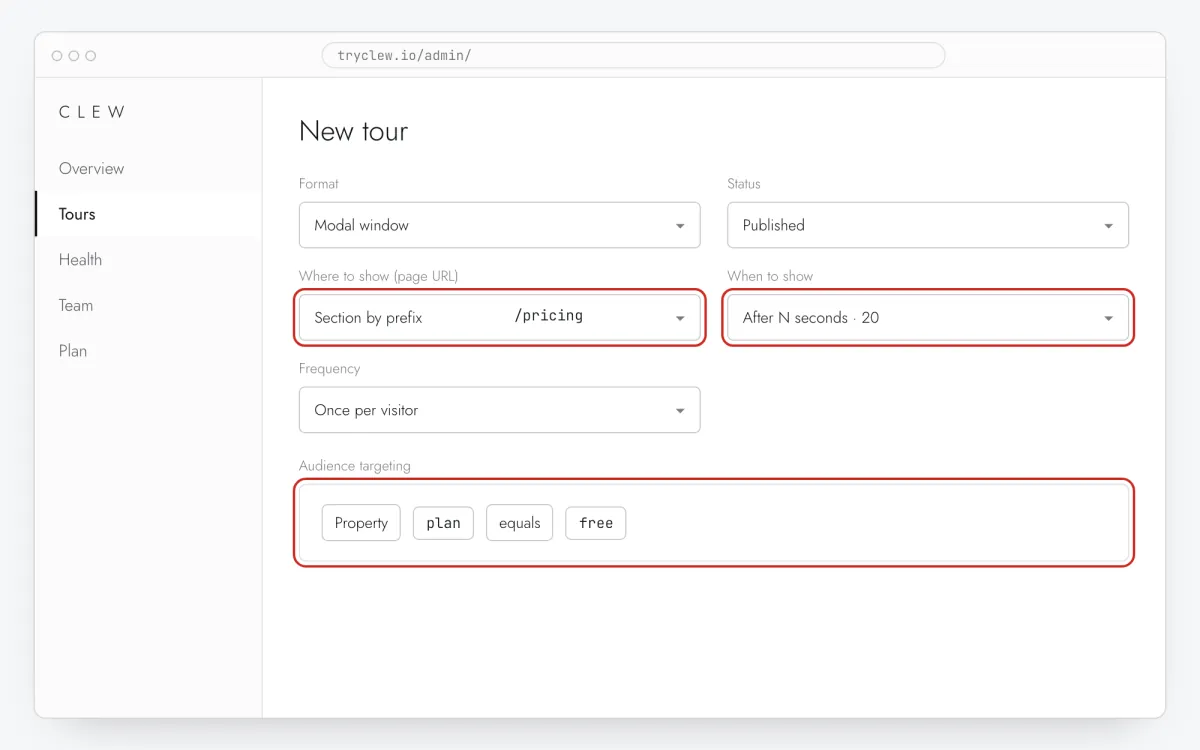
Step 6 · schematic illustration - Step 07
Publish and check it on the live site
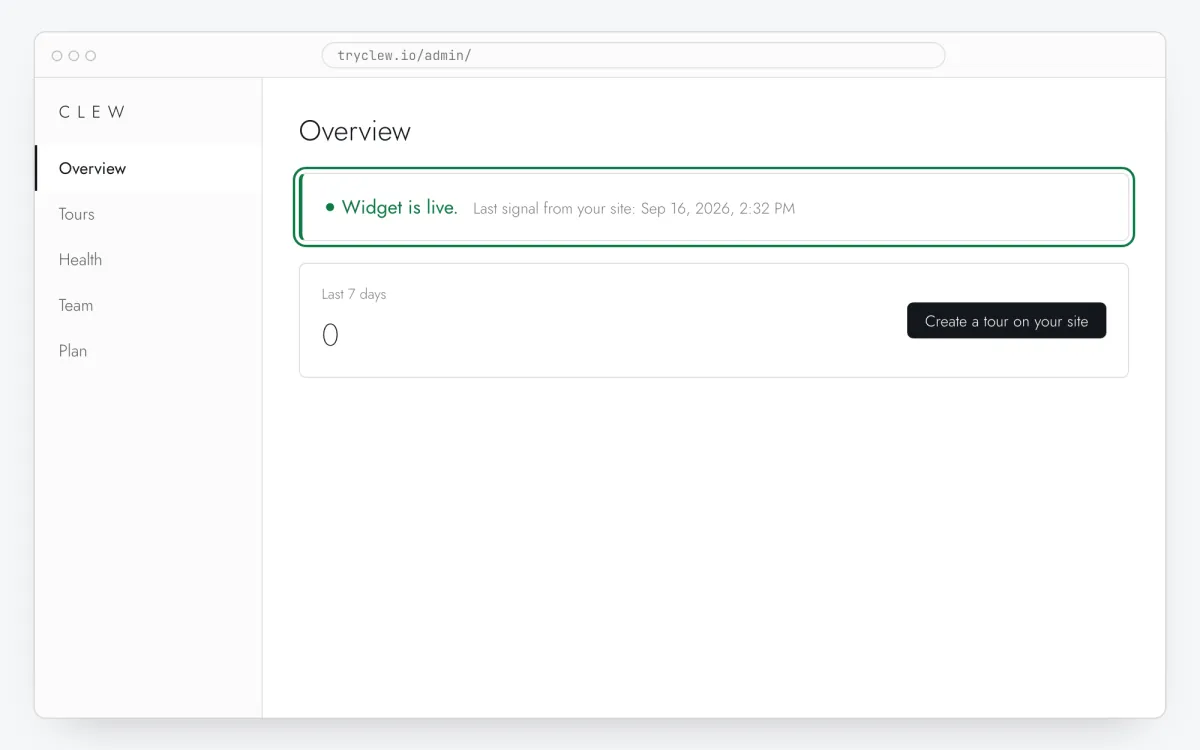
Set Status to Published and save. Open the page in a private window — Clew remembers who has already seen a “once” item, so your usual browser may skip it. Views, completions and drop-offs appear in the tour stats.
Step 7 · schematic illustration
Pitfalls: product tour via Google Tag Manager
Don’t use a History Change trigger
The widget follows single-page navigation on its own. A second trigger on History Change only loads the script again for nothing.
Point steps at elements that exist for everyone
Banners, personalized widgets and A/B-tested blocks are missing for some users. Anchor steps to navigation, headings and main buttons; if an element is missing, that step is reported in Health.
Questions and answers
Can the tour start only for admins?
Yes, with an audience rule on a property like role passed from the data layer — rules are part of Pro.
Does GTM slow the product tour down?
The widget loads a moment after the container. Only an item with Right on page load on the very first page view might appear a fraction of a second later than with a direct install.
Is the product tour free?
Yes — tours are on the Free plan with up to 3 published. You only need Pro for audience rules, A/B tests and more tours.
Do I need to know CSS selectors?
No. Edit on your site opens the editor on your page and Pick element fills the selector when you click an element.