How to add a paywall upgrade prompt in a Lovable app without a developer
A soft paywall in a Lovable app: when a free user reaches a paid feature, a modal explains the upgrade and links to your pricing page — targeted by plan, measured, and editable without a release.
- Time
- ● 20 minutes
- Price
- 14-day free trial, no card
- Who does it
- You and the Lovable chat
Example: an upgrade prompt in a Lovable app
A Lovable journaling app keeps AI insights for paid users. Free users who open /insights see “Weekly insights are part of Plus” with a link to the pricing page every time; the app shows its own locked state underneath.
This format is part of the Pro plan. Every new account starts with a 14-day free trial with all formats and audience rules, no card required. When the trial ends nothing is deleted and published items keep showing; the Free plan keeps tours and tooltips free.
How to add the paywall prompt in a Lovable app, step by step
- Step 01
Copy your Clew snippet
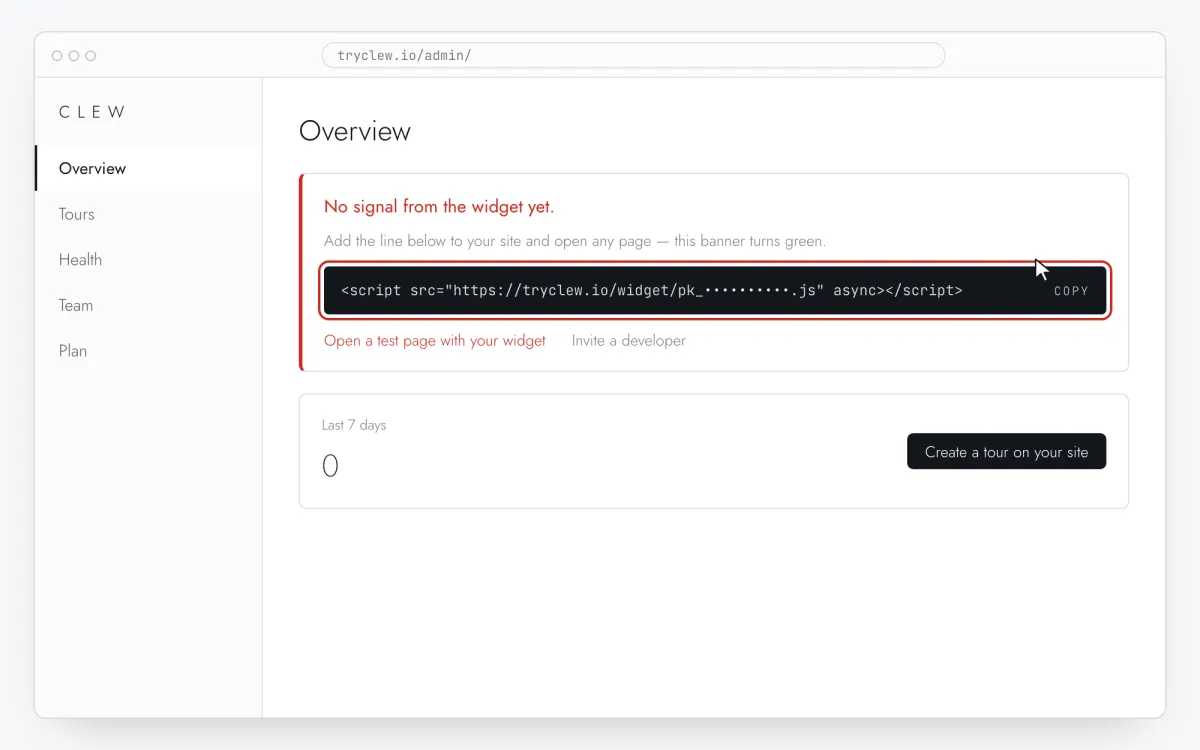
Create a free account (or sign in), add your site and open Admin → Overview. Click the line in the “No signal from the widget yet.” card to copy it — it carries your real site key instead of the placeholder.
<!-- Clew: replace PASTE_YOUR_SITE_KEY with the site key from Admin > Overview -->
<script src="https://tryclew.io/widget/PASTE_YOUR_SITE_KEY.js" async></script>
Step 1 · schematic illustration - Step 02
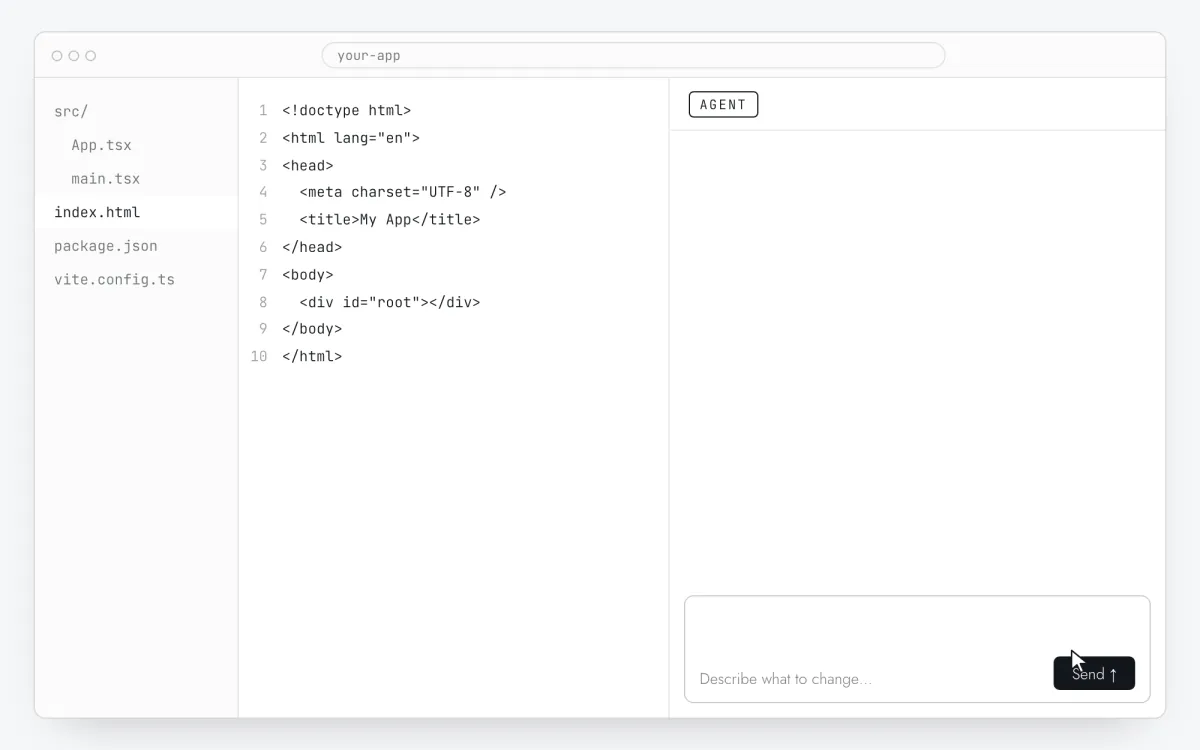
Open the project chat in Lovable
Open your project in Lovable. The chat edits the code directly; make sure you are on the main version you publish, not an old remix.
Step 2 · schematic illustration - Step 03
Send the prompt with your key
Copy the prompt, replace
PASTE_YOUR_SITE_KEYwith your key and send it. Besides the script tag it asks for what the paywall upgrade prompt needs from the code.Add the Clew onboarding widget to this app. Insert this exact tag once so it loads on every page, including after client-side route changes: <script src="https://tryclew.io/widget/PASTE_YOUR_SITE_KEY.js" async></script> This is a Lovable project (React + Vite): put the tag in index.html right before </head>. After the signed-in user is loaded, and whenever the subscription changes, call Clew.identify({ plan: <the user's current plan id as a string, e.g. "free"> }). If the widget may not have loaded yet, first define the queue stub: window.TutorKit = window.TutorKit || { q: [], identify: function (p) { this.q.push(["identify", p]); } }; then call window.TutorKit.identify(...). Add a data-tour attribute to the buttons of paid features (for example data-tour="export"). Do not add any payment, gating or paywall logic of your own and do not change what the buttons do. Rules: - Use the script URL exactly as given. Do not download it, bundle it or install an npm package. - If the project sets a Content-Security-Policy, allow https://tryclew.io in script-src and connect-src. - Change nothing else and show me the diff.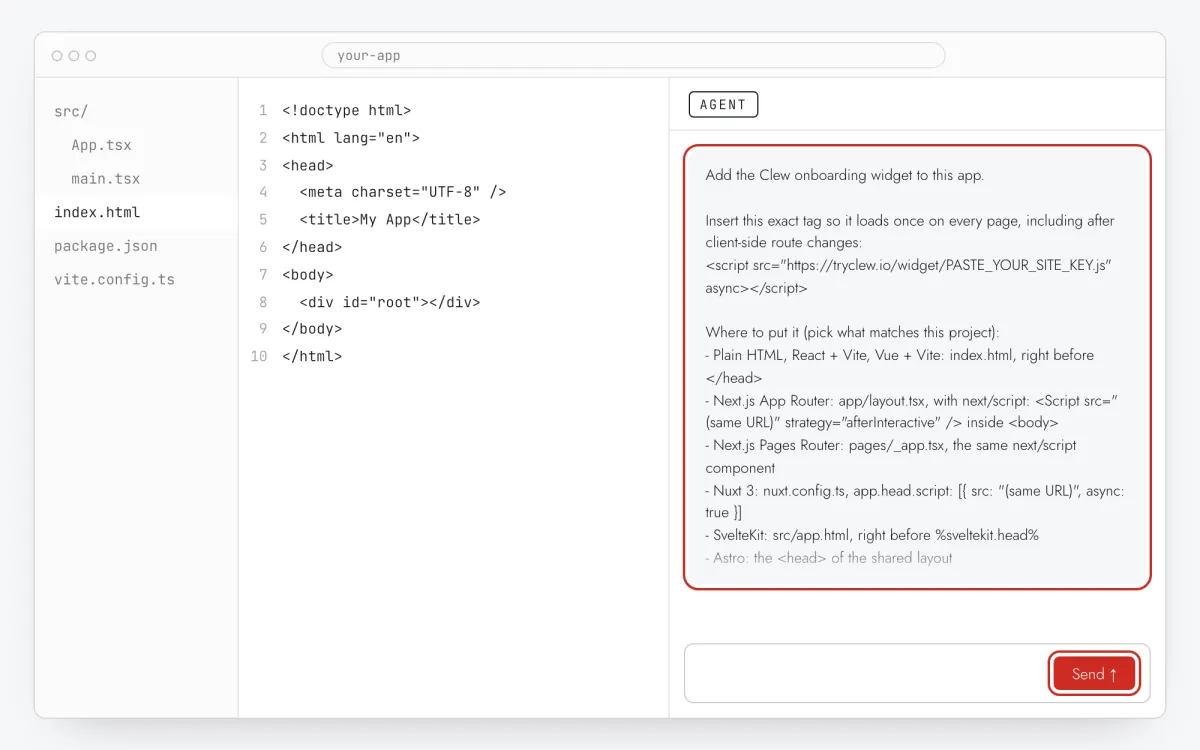
Step 3 · schematic illustration - Step 04
Check the change and publish
Open the code view: expect
index.htmlwith one added line, plus the small additions from the prompt. Then press Publish — the widget works only on the published app.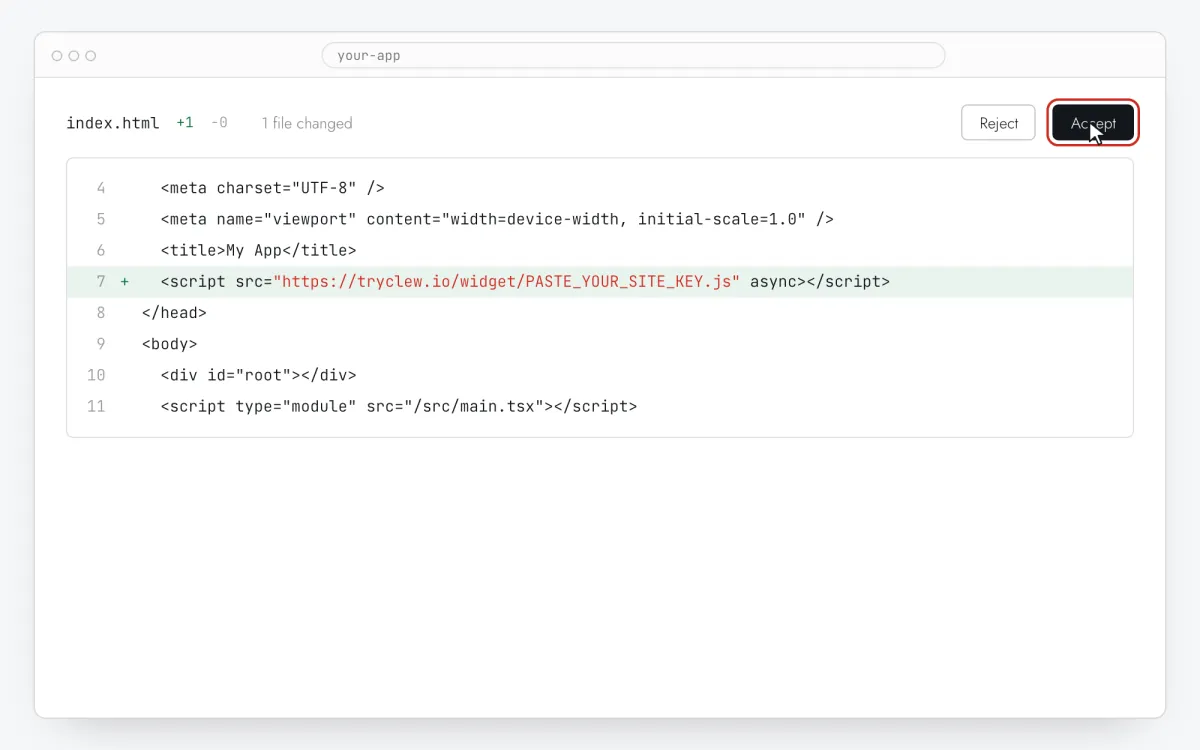
Step 4 · schematic illustration - Step 05
Write the upgrade prompt
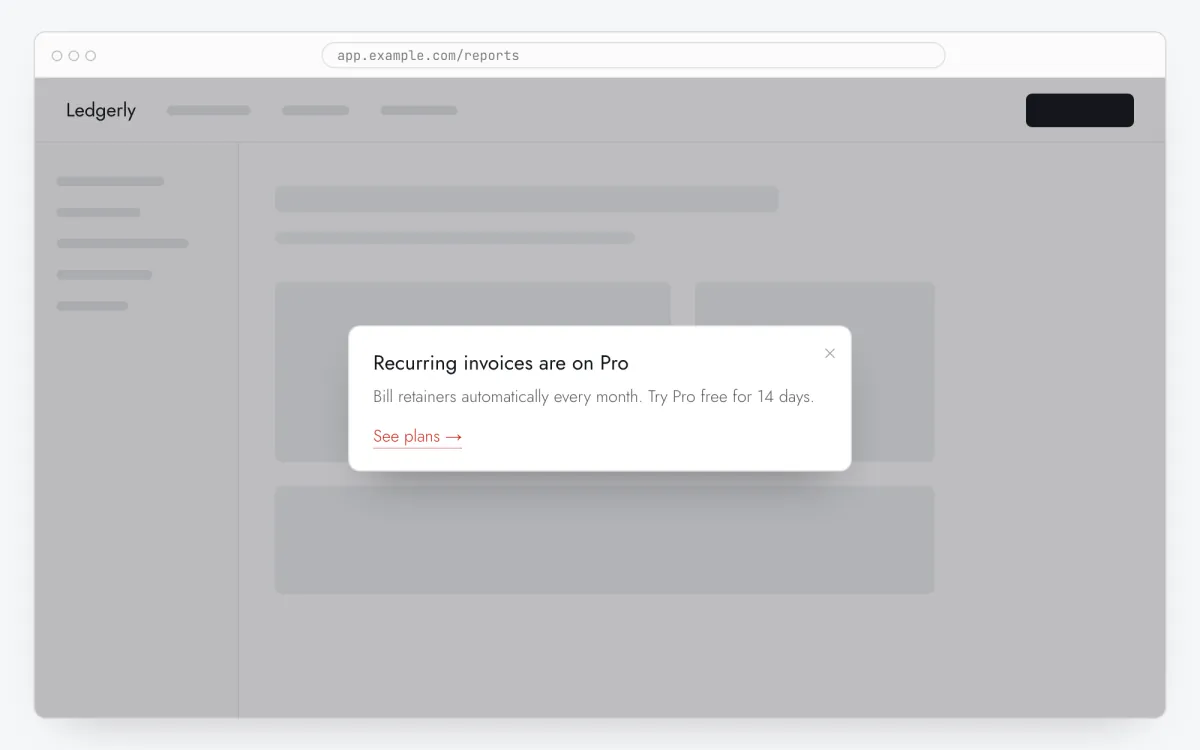
In Clew open Flows → + New flow and choose Modal window. One step: a title with the benefit (“Export to CSV is on Pro”), one sentence of value, and in Link text / Link URL the button and your pricing or checkout URL.
Step 5 · schematic illustration - Step 06
Choose where, when and for whom it shows
In the same editor, set Where to show (page URL), When to show, Audience targeting and Frequency. These are the settings of the example above:
Setting Value Format Modal window Where to show (page URL) Section by prefix /insightsWhen to show Right on page load Audience targeting Property planequalsfreeFrequency Every visit 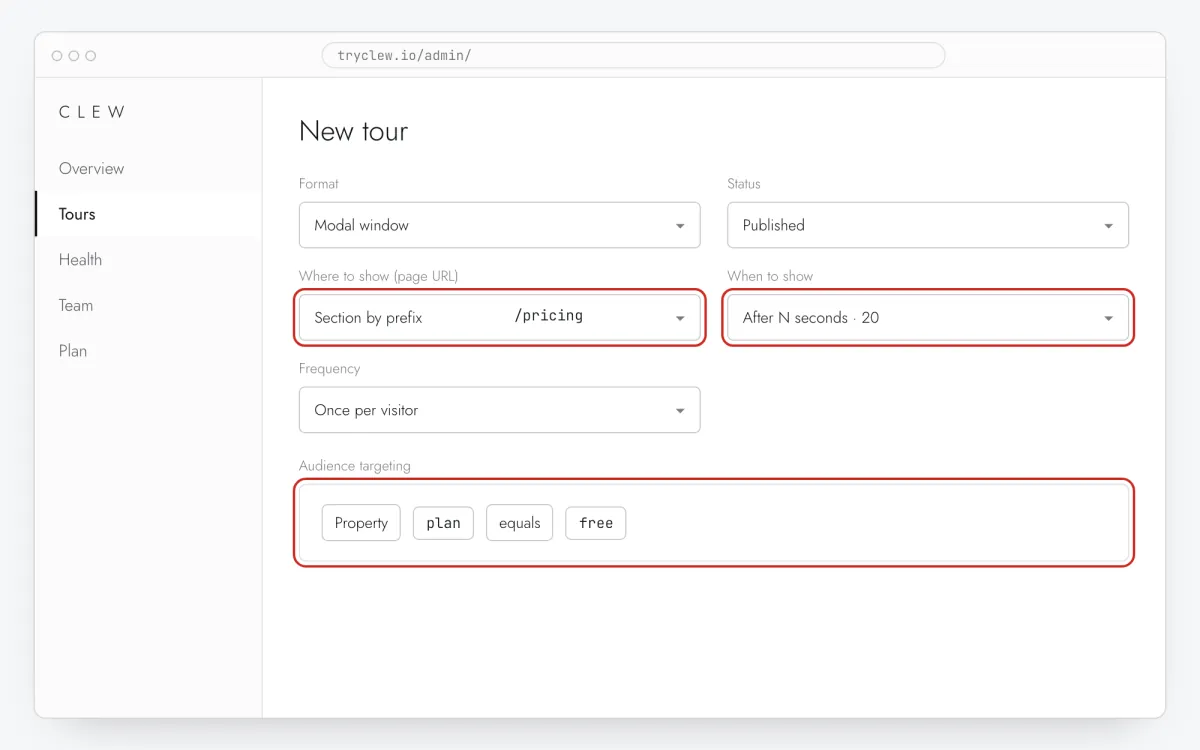
Step 6 · schematic illustration - Step 07
Publish and check it on the live site
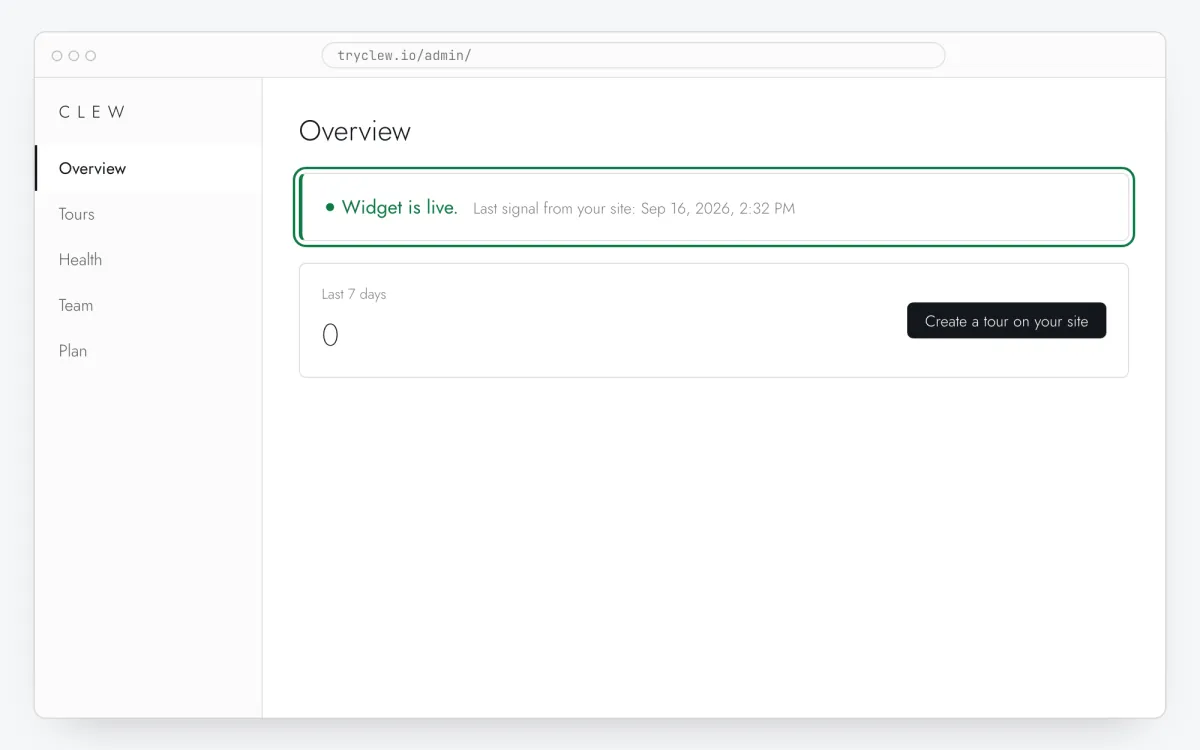
Set Status to Published and save. Open the page in a private window — Clew remembers who has already seen a “once” item, so your usual browser may skip it. Views, completions and drop-offs appear in the tour stats.
Step 7 · schematic illustration
Pitfalls: paywall upgrade prompt in a Lovable app
Supabase auth loads after the page
Lovable apps usually sign users in with Supabase, so the user is known a moment after load. That’s fine: Clew.identify() re-checks the rules whenever it is called, and the paywall upgrade prompt appears then.
The editor preview is not your published app
Build and test the paywall upgrade prompt on the published URL (or your custom domain). URL rules compare paths, so the same settings work for both.
The prompt doesn’t replace access checks
If the paid feature is reachable for free users in your app, the modal appears but the feature still works behind it. Check that the server side enforces the plan; the prompt is only the message.
Update the property after upgrading
Properties live in the browser until the app sends a new value. Call Clew.identify({ plan: "pro" }) after a successful upgrade, or the new customer keeps seeing the prompt.
Questions and answers
Does Clew connect to Stripe?
No. The button links to your pricing or Stripe checkout page; Lovable’s Stripe integration handles payment.
Will the next Lovable prompts remove the line?
Usually not — it lives in index.html. If Admin → Overview stops showing “Widget is live” after a big regeneration, send the prompt again.
Does Clew take the payment?
No. The button links to your own pricing page or checkout; Clew never handles cards, subscriptions or access.
Is the paywall prompt free?
It needs the modal format and an audience rule, both in Pro. The 14-day trial includes them, no card.
What else you can add in a Lovable app
- How to create a product tour in a Lovable app without a developer
- How to add an onboarding checklist in a Lovable app without a developer
- How to set up user onboarding in a Lovable app without a developer
Paywall prompt on other platforms
- ShopifyHow to add a paywall upgrade prompt on Shopify without a developer
- Google Tag ManagerHow to add a paywall upgrade prompt via Google Tag Manager without a developer
- Bolt.newHow to add a paywall upgrade prompt in a Bolt.new app without a developer
- v0How to add a paywall upgrade prompt in a v0 app without a developer
- ReplitHow to add a paywall upgrade prompt in a Replit app without a developer
- CursorHow to add a paywall upgrade prompt in an app built with Cursor without a developer
- Claude CodeHow to add a paywall upgrade prompt with Claude Code without a developer
- ChatGPT CodexHow to add a paywall upgrade prompt with ChatGPT Codex without a developer
- Qwen CodeHow to add a paywall upgrade prompt with Qwen Code without a developer